"Hunting the Hero"
Culture does not make people. People make culture. If it is true that the full humanity of women is not our culture, then we can and must make it our culture
- Chimamanda Ngozi Adichie
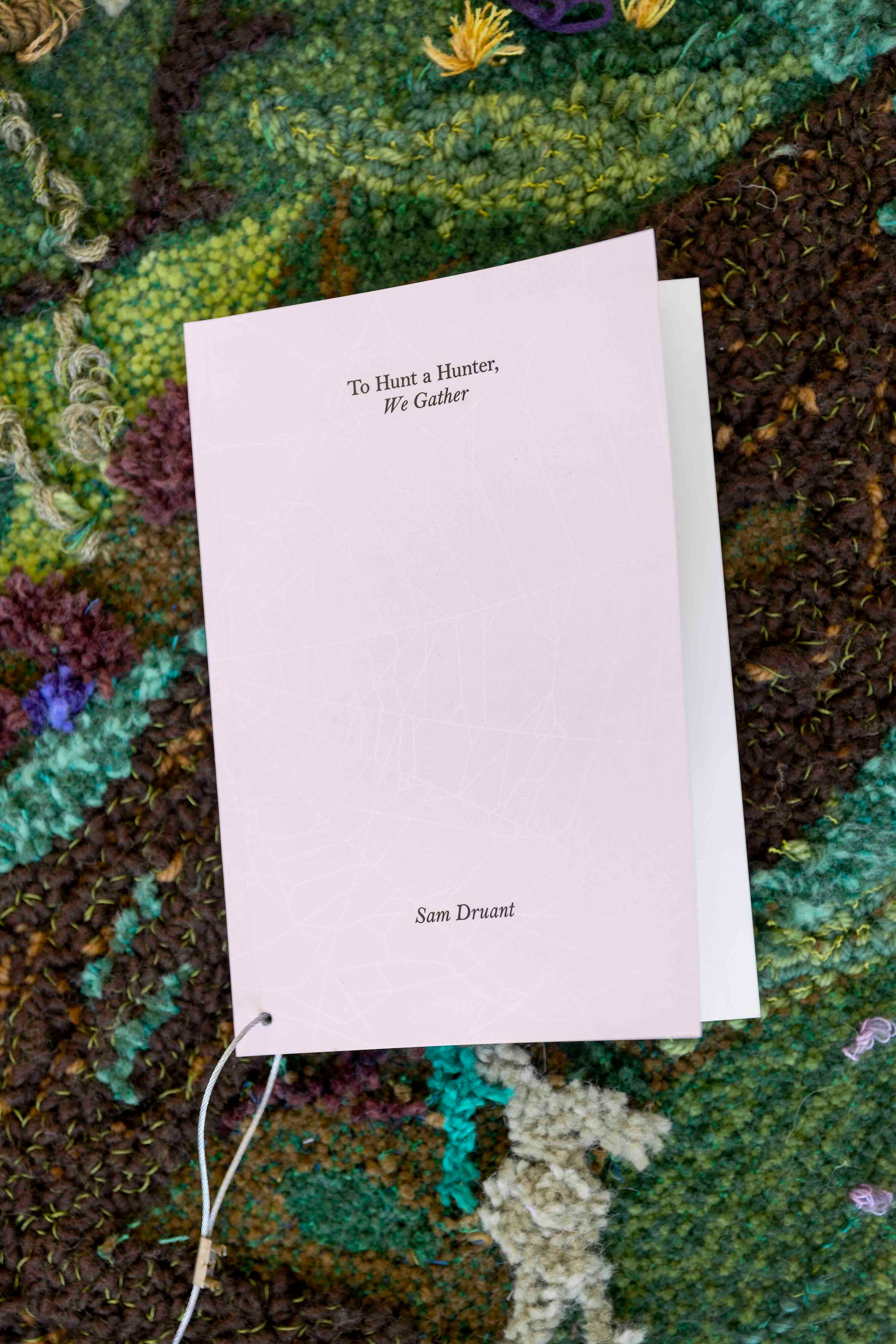
“Nothing is original” declared film director Jim Jarmusch two decades ago. One must “devour old films, new films, music, books, poems, dreams, random conversations, lights, and shadows (…) because “originality is non-existent, but authenticity is invaluable”. The idea that we are internalizing everything we see, hear, read, experience, (…), whether it is positive or negative, fuelling four minds, touches upon the mere essence of Sam Druant’s (°1998, Antwerp) debut solo – To Hunt a Hunter, We Gather – at Gallery Geukens & De Vil.
To create this exhibition Druant chose to focus on the methodology of Gathering. Gathering inspiration in texts, images, theories, conversations, … But also, the act of gathering networks, and observing the actions and stories in our surroundings and of oneself. Each of these sources – good, bad, conscious, or unconscious – are stored in what the artist refers to as a Carrier Bag. With this show, Druant empties her own personal Carrier Bag, and offers a voyeuristic peek into her imagination. By collecting the voices of many, and weaving them together into new stories, the artist presents a refreshing take on the dominant narratives that define our Western society.
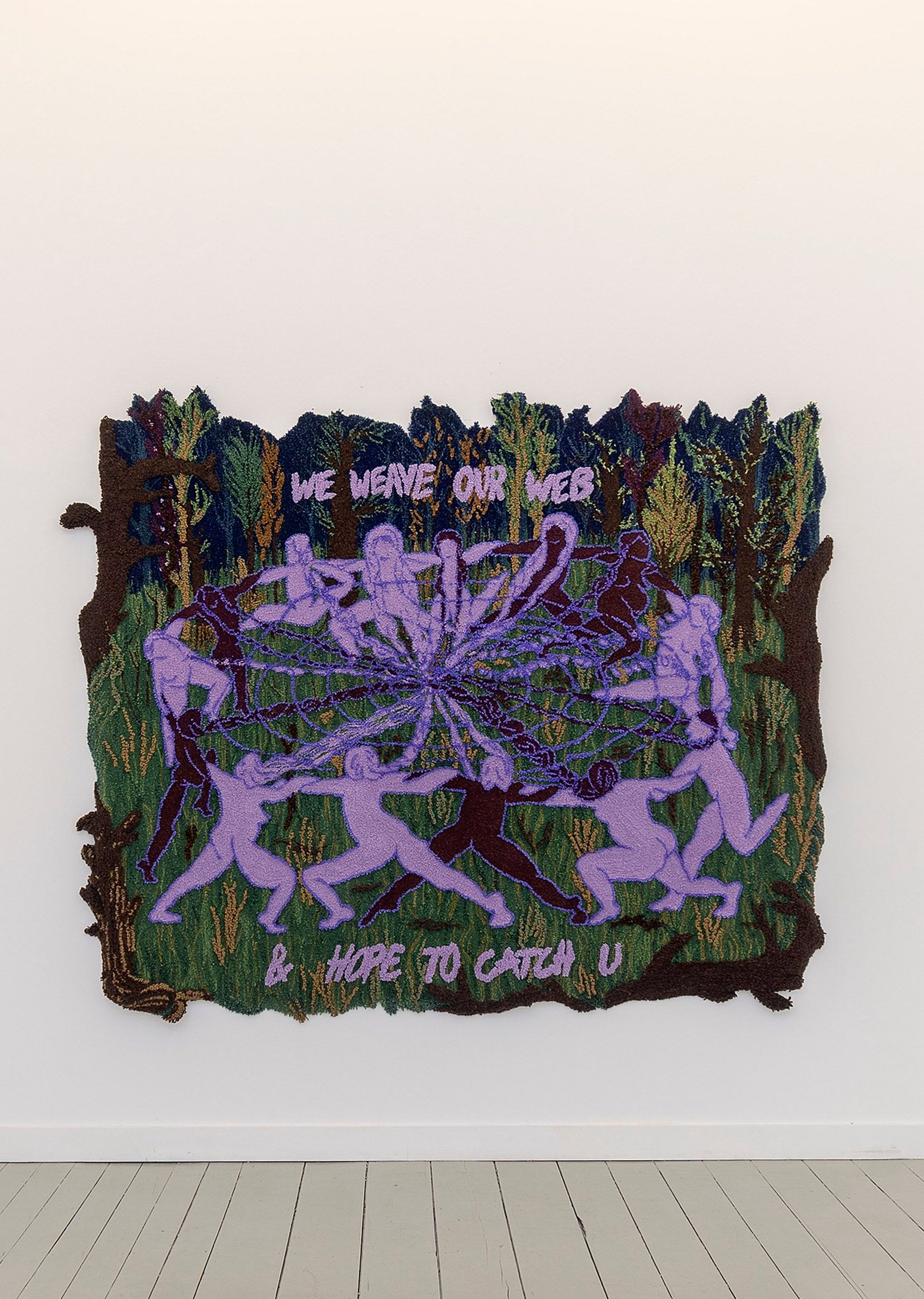
When entering, a large textile work unfolds on the facing wall. We Weave, presenting a group of women, twirling and dancing in the woods, while weaving a web in between them, is a key-work in the show. Throughout the exhibition, the motif of a spiderweb is used as a metaphor to visualize the concept of a Carrier Bag. A non-linear web, woven by a spider (the ultimate hunter-gatherer). The spider is rooted in a feminine history since she was considered a creation goddess in many Native American cultures. Grandmother Spider (or Earth Mother, Earth Goddess, …) is the mother of humankind, protecting, nurturing, and guiding us along our paths. It makes one reflect on how our world would be if we would still worship her as our creation goddess? No story of Adam and Eve, with Eve as the ultimate sinner. Would women hold primary power positions in our social system or would it be socially egalitarian? Research by pioneers like Heide Göttner-Abendroth back up the idea that matriarchal societies are no images of patriarchal ones, because they don’t need patriarchy’s hierarchical structures of domination.
Druants idea of the Carrier Bag – as we see in the work facing the desk – was inspired by Ursula Le Guin’s essay The Carrier Bag of Fiction. She introduced the idea of anthropologist Elizabeth Fisher that man’s first cultural devise must have been a carrying tool, rather than a spear to hunt. The ratio of collecting nuts and berries must have been much higher than that of hunting animals. But then why do early cave paintings mostly depict figures hunting? It illustrates how storytelling is a powerful thing. The narratives that survive the ages are the exciting ones, filled with drama and heroes. These – often violent – stories in chronological order, is what we call history. As stated by Le Guin, the tales in our Carrier Bags are quite the opposite: a jumbled mess, focussing on people rather than on a singular hero. Inspired by this author, Druant’s work reflects on how history would look like if the stories that survived where the not the dramatic hero narratives but the ones about gatherers? How would the history of Western civilization look like if it was nonlinear? Could we rewrite our history (and today’s society) if we “Hunt the Hero/Hunter”?
Druant uses textile as a preferred medium. Historically speaking, a tapestry tells a story of the people who made it, to the people it was made for – a technique appealing to the artist. The use of textile symbolizes the weaving together of experiences, stories, and images into a new narrative. The viewer in his turn, absorbs this story and uses it for his own. The medium of textile is historically considered inferior because it’s linked to women and the domestic sphere. Even though textile has become a more popular medium in the visual arts today, the (annoying) connotations with gender are hard to shake. It begs the question: how would the history of Western Art have evolved, if it would have been determined by a more diverse group of artists?
It is quite hard to push the boundaries of dominant discourse and create space for new counter-narratives. Strong characters define the works of Sam Druant, but at the same time the artist shares small glimpses of disempowerment. For example, the work Running with a Leash is based on Women who run with the Wolves by Pinkola Estés, presenting the archetype of "The Wild Woman". Estés presents an alternative feminine mythology that calls women to discover their – powerful – nature, instead of letting their emotions be trivialized. However, the text “Still treating her like a dog” reveals the challenges that come with. In this sense, the work relates to Hunting Myself, which touches upon the notion of being gaslighted to conform to normative society.
Human hostility is not determined by biology or gender. Brutal behaviour is the product of culture. To create change, we must subvert the system that we are part of. By uniting, gathering, and sharing as many voices as possible, we can pinpoint the complex web of oppressions, because “how can we change a system that cannot be named?” (Cf. Bell Hooks). Sam Druant empties her carrier bag all over the walls of the exhibition space, inviting to reflect on our society, which culminates in the bonbonniere, the heart of the exhibition, presenting a large table for everyone to sit around, to read, converse and share thoughts, facilitating a place where We Gather."
- Lien Craps
NL:
“Jagen op de held”
Cultuur maakt geen mensen. Mensen maken cultuur. Als het waar is dat de volledige menselijkheid van vrouwen niet tot onze cultuur behoort, dan kunnen en moeten we ervoor zorgen dat dit wel zo wordt.
- Chimamanda Ngozi Adichie
“Niets is origineel”, verklaarde filmregisseur Jim Jarmusch twintig jaar geleden. Men moet “oude films, nieuwe films, muziek, boeken, gedichten, dromen, willekeurige gesprekken, licht en schaduwen verslinden (…) omdat originaliteit niet bestaat, maar authenticiteit van onschatbare waarde is”. Het idee dat we alles wat we zien, horen, lezen, ervaren (…), of het nu positief of negatief is, internaliseren en daarmee onze geest voeden, raakt aan de essentie van het debuut van Sam Druant (°1998, Antwerpen) – To Hunt a Hunter, We Gather – in Galerie Geukens & De Vil.
Om deze tentoonstelling te creëren, koos Druant ervoor om zich te concentreren op de methodologie van het verzamelen. Het verzamelen van inspiratie in teksten, beelden, theorieën, gesprekken, … Maar ook het verzamelen van netwerken en het observeren van de acties en verhalen in onze omgeving en van onszelf. Al deze bronnen – goed, slecht, bewust of onbewust – worden opgeslagen in wat de kunstenaar een Carrier Bag noemt. Met deze tentoonstelling maakt Druant haar eigen persoonlijke Carrier Bag leeg en biedt ze een voyeuristische blik in haar verbeelding. Door de stemmen van velen te verzamelen en ze samen te weven tot nieuwe verhalen, presenteert de kunstenaar een verfrissende kijk op de dominante verhalen die onze westerse samenleving definiëren.
Bij binnenkomst ontvouwt zich een groot textielwerk op de tegenoverliggende muur. We Weave, dat een groep vrouwen toont die ronddraaien en dansen in het bos terwijl ze een web tussen hen weven, is een belangrijk werk in de tentoonstelling. In de hele tentoonstelling wordt het motief van een spinnenweb gebruikt als metafoor om het concept van een draagtas te visualiseren. Een niet-lineair web, geweven door een spin (de ultieme jager-verzamelaar). De spin is geworteld in een vrouwelijke geschiedenis, aangezien ze in veel inheemse Amerikaanse culturen werd beschouwd als een scheppingsgodin. Grootmoeder Spin (of Aardmoeder, Aardgodin, …) is de moeder van de mensheid, die ons beschermt, voedt en begeleidt op onze weg. Het zet ons aan het denken over hoe onze wereld eruit zou zien als we haar nog steeds zouden aanbidden als onze scheppingsgodin? Geen verhaal van Adam en Eva, met Eva als de ultieme zondares. Zouden vrouwen de belangrijkste machtsposities in ons sociale systeem bekleden of zou het sociaal egalitair zijn? Onderzoek door pioniers als Heide Göttner-Abendroth ondersteunt het idee dat matriarchale samenlevingen geen afspiegeling zijn van patriarchale samenlevingen, omdat ze de hiërarchische machtsstructuren van het patriarchaat niet nodig hebben.
Druants idee van de draagtas – zoals we zien in het werk tegenover het bureau – is geïnspireerd op Ursula Le Guins essay The Carrier Bag of Fiction. Zij introduceerde het idee van antropologe Elizabeth Fisher dat het eerste culturele hulpmiddel van de mens een draagmiddel moet zijn geweest, in plaats van een speer om mee te jagen. Het verzamelen van noten en bessen moet veel vaker hebben plaatsgevonden dan het jagen op dieren. Maar waarom zijn op vroege grotschilderingen dan vooral jachttaferelen afgebeeld? Dit illustreert hoe krachtig verhalen vertellen is. De verhalen die de tand des tijds hebben doorstaan, zijn spannende verhalen vol drama en helden. Deze – vaak gewelddadige – verhalen in chronologische volgorde noemen we geschiedenis. Zoals Le Guin stelt, zijn de verhalen in onze Carrier Bags juist het tegenovergestelde: een wirwar van verhalen, waarin de nadruk ligt op mensen in plaats van op één enkele held. Geïnspireerd door deze auteur reflecteert Druant in haar werk op hoe de geschiedenis eruit zou zien als de verhalen die bewaard zijn gebleven niet de dramatische heldenverhalen waren, maar die over verzamelaars? Hoe zou de geschiedenis van de westerse beschaving eruitzien als deze niet-lineair was? Zouden we onze geschiedenis (en de huidige samenleving) kunnen herschrijven als we “de held/jager zouden jagen”?
Druant gebruikt textiel als haar favoriete medium. Historisch gezien vertelt een wandtapijt een verhaal over de mensen die het hebben gemaakt, aan de mensen voor wie het is gemaakt – een techniek die de kunstenaar aanspreekt. Het gebruik van textiel symboliseert het samenweven van ervaringen, verhalen en beelden tot een nieuw verhaal. De toeschouwer neemt op zijn beurt dit verhaal in zich op en gebruikt het voor zichzelf. Textiel wordt historisch gezien als een inferieur medium beschouwd omdat het wordt geassocieerd met vrouwen en de huiselijke sfeer. Hoewel textiel tegenwoordig een populairder medium is geworden in de beeldende kunst, zijn de (vervelende) connotaties met gender moeilijk van zich af te schudden. Dit roept de vraag op: hoe zou de geschiedenis van de westerse kunst zich hebben ontwikkeld als deze was bepaald door een meer diverse groep kunstenaars?
Het is vrij moeilijk om de grenzen van het dominante discours te verleggen en ruimte te creëren voor nieuwe tegenverhalen. Sterke personages kenmerken het werk van Sam Druant, maar tegelijkertijd laat de kunstenaar kleine glimpen van machteloosheid zien. Het werk Running with a Leash is bijvoorbeeld gebaseerd op Women who run with the Wolves van Pinkola Estés, waarin het archetype van ‘The Wild Woman’ wordt gepresenteerd. Estés presenteert een alternatieve vrouwelijke mythologie die vrouwen oproept om hun – krachtige – aard te ontdekken, in plaats van hun emoties te laten bagatelliseren. De tekst ‘Still treating her like a dog’ onthult echter de uitdagingen die daarmee gepaard gaan. In die zin sluit het werk aan bij Hunting Myself, dat ingaat op het idee van gaslighting om te conformeren aan de normatieve samenleving.
Menselijke vijandigheid wordt niet bepaald door biologie of geslacht. Brutaal gedrag is het product van cultuur. Om verandering teweeg te brengen, moeten we het systeem waarvan we deel uitmaken ondermijnen. Door zoveel mogelijk stemmen te verenigen, te verzamelen en te delen, kunnen we het complexe web van onderdrukking in kaart brengen, want “hoe kunnen we een systeem veranderen dat niet benoemd kan worden?” (Cf. Bell Hooks). Sam Druant leegt haar draagtas over de muren van de tentoonstellingsruimte en nodigt ons uit om na te denken over onze samenleving. Dit culmineert in de bonbonnière, het hart van de tentoonstelling, een grote tafel waar iedereen omheen kan zitten, lezen, praten en gedachten kan uitwisselen, een plek waar we samenkomen.
Artikel door Indra Devriendt Sam Druant - Let’s meet at 8 p.m. (the usual spot)
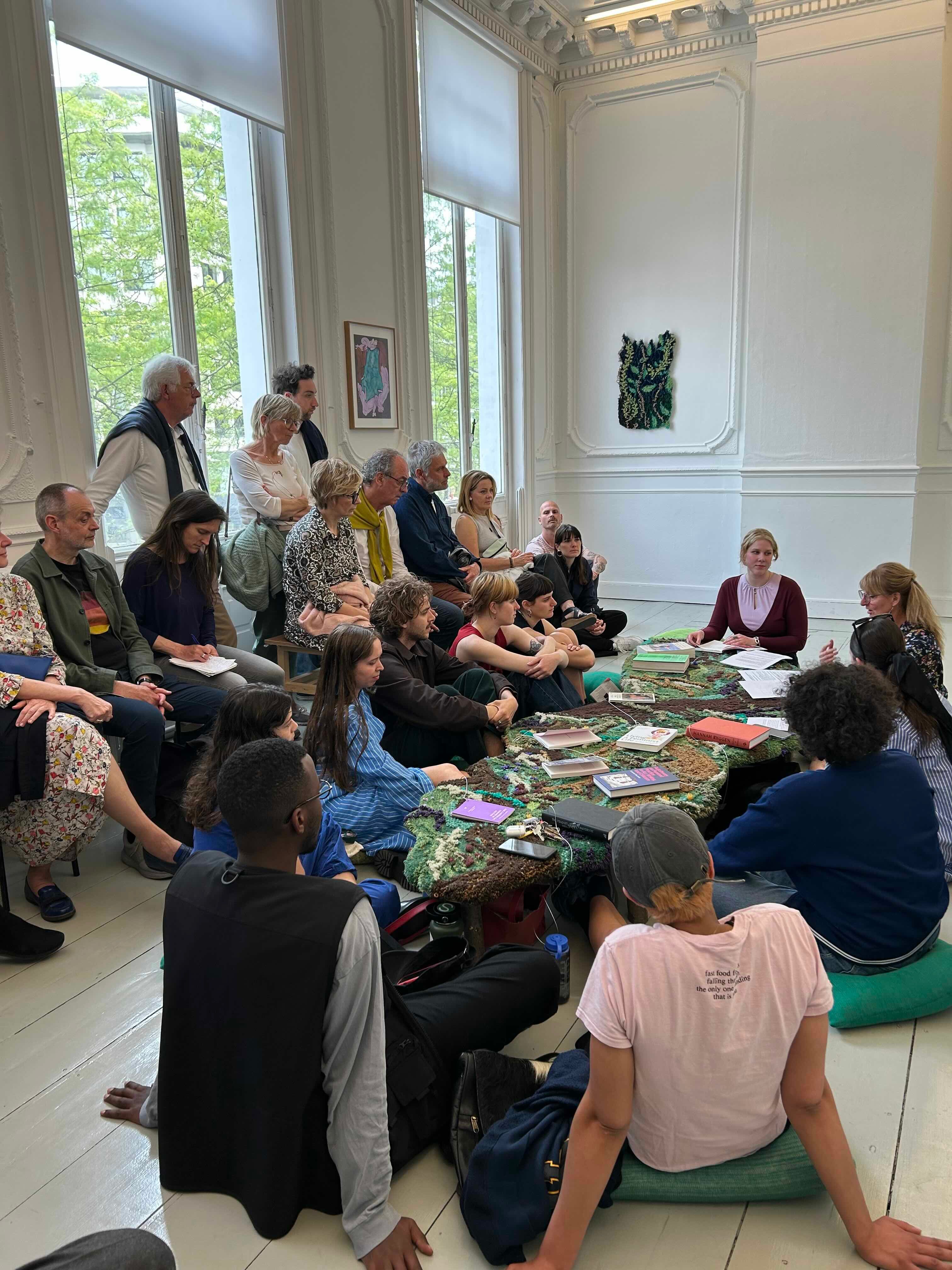
To Hunt a Hunter, We Gather - conversation with Anja Veirman, 2023
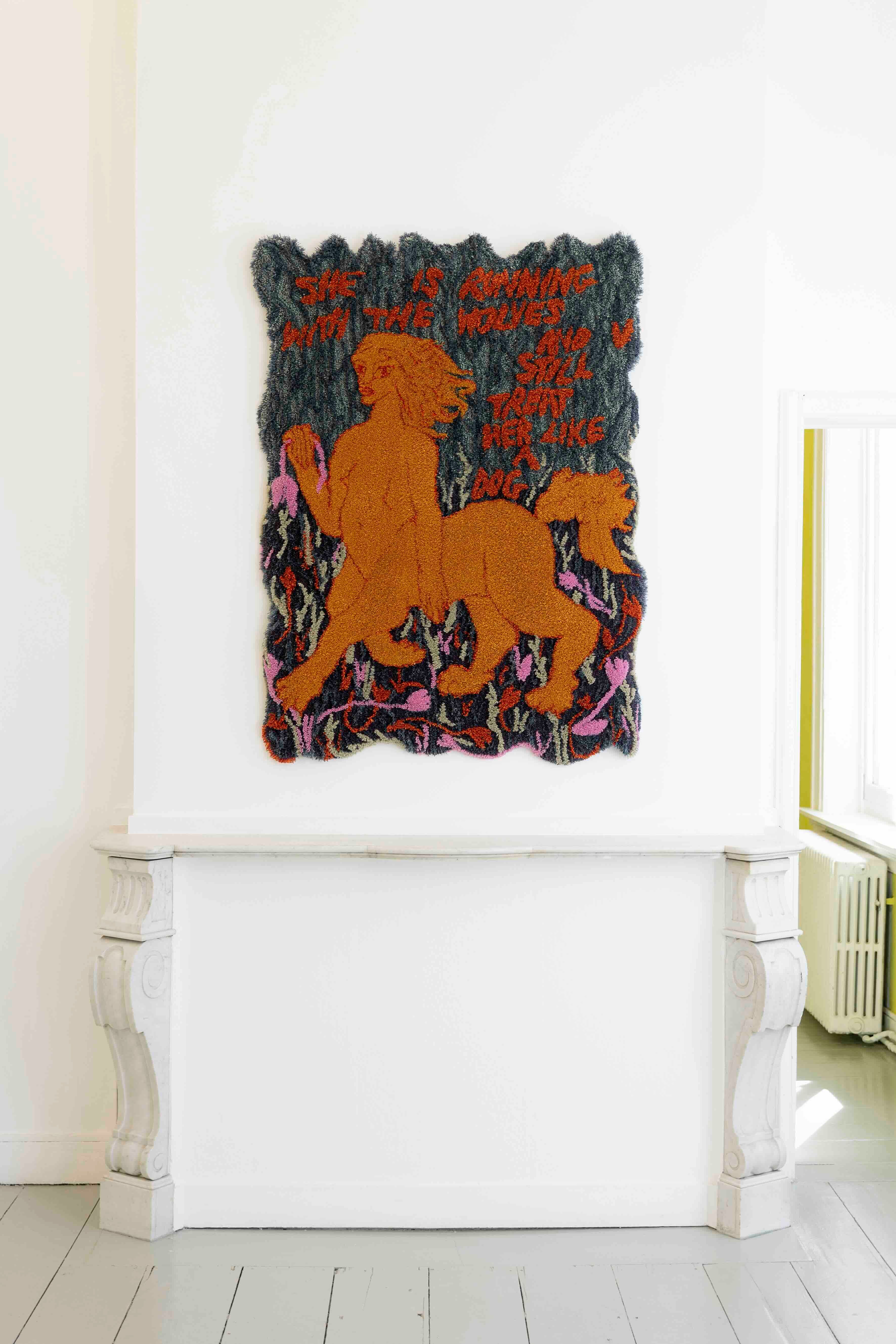
Running with a Leash, 2023
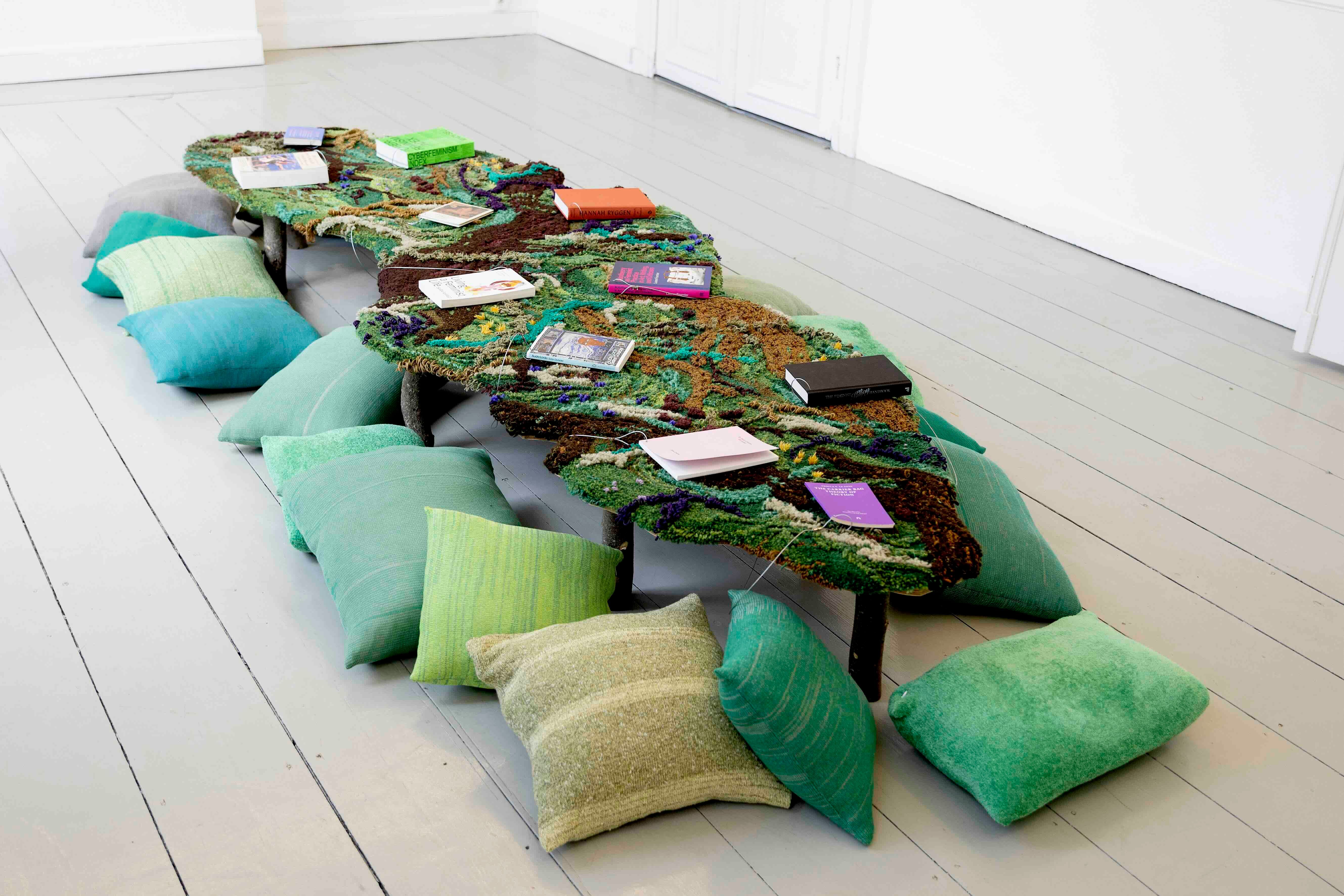
A Table to Gather, 2023
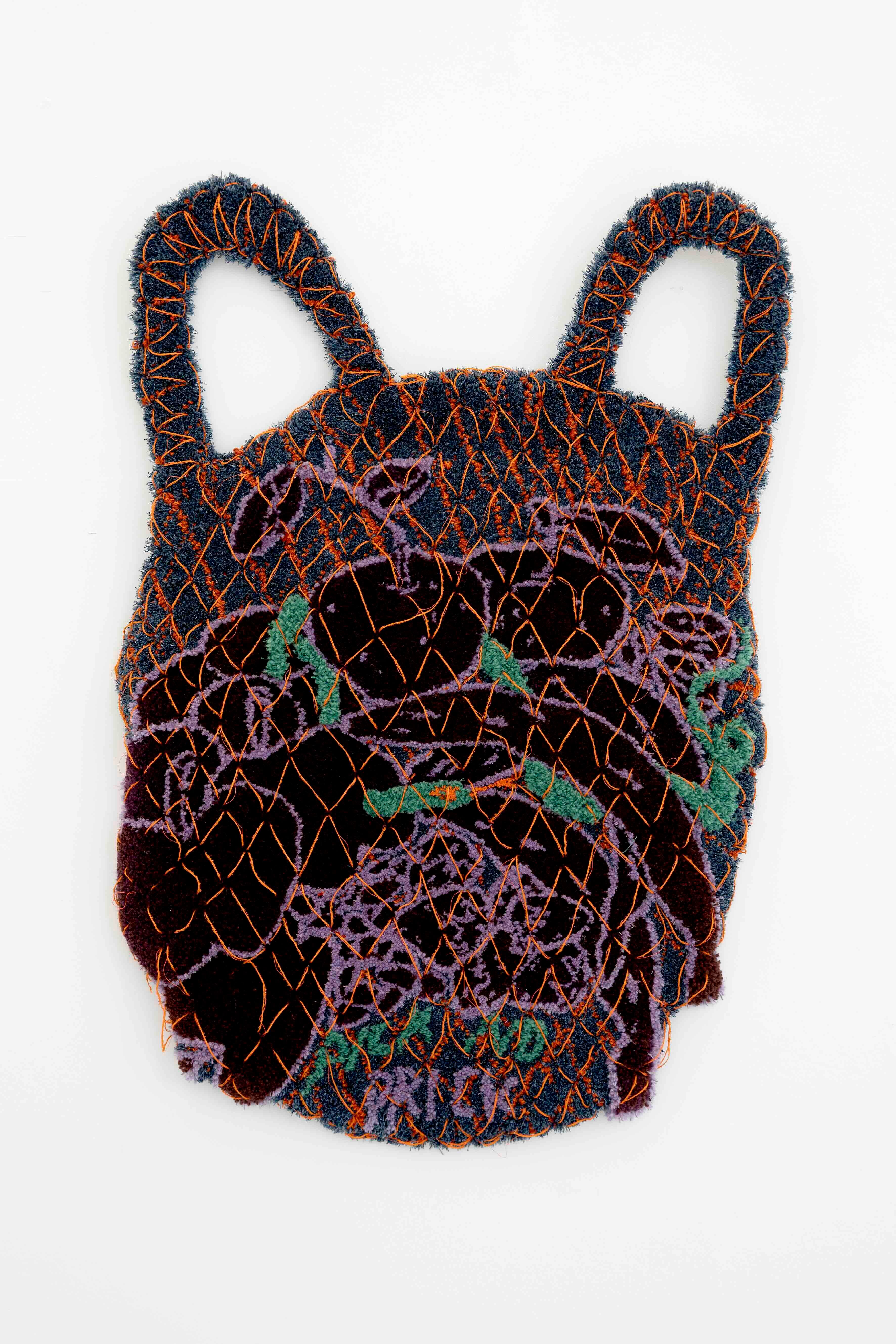
Carrier Bag, 2023
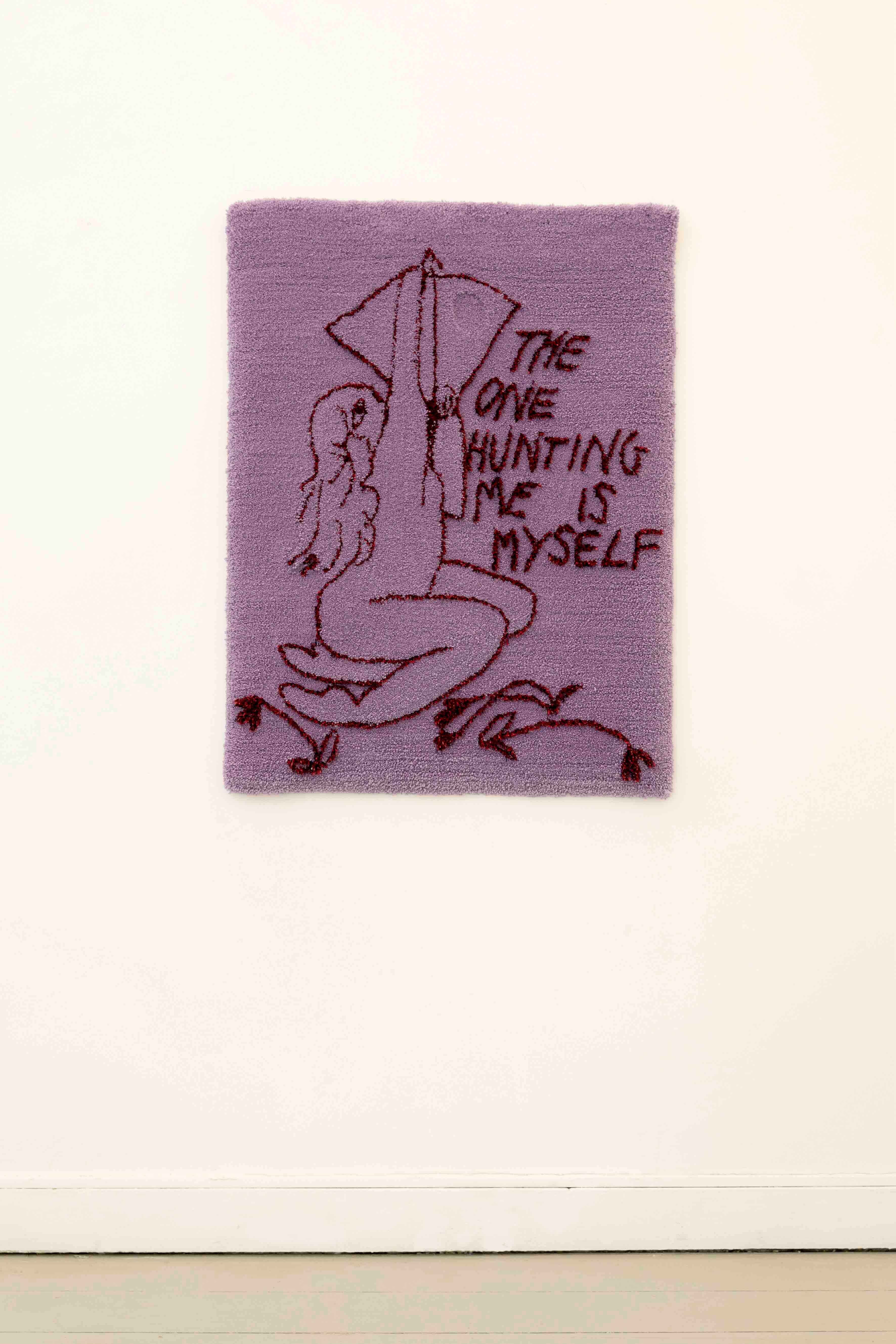
Hunting Myself, 2023
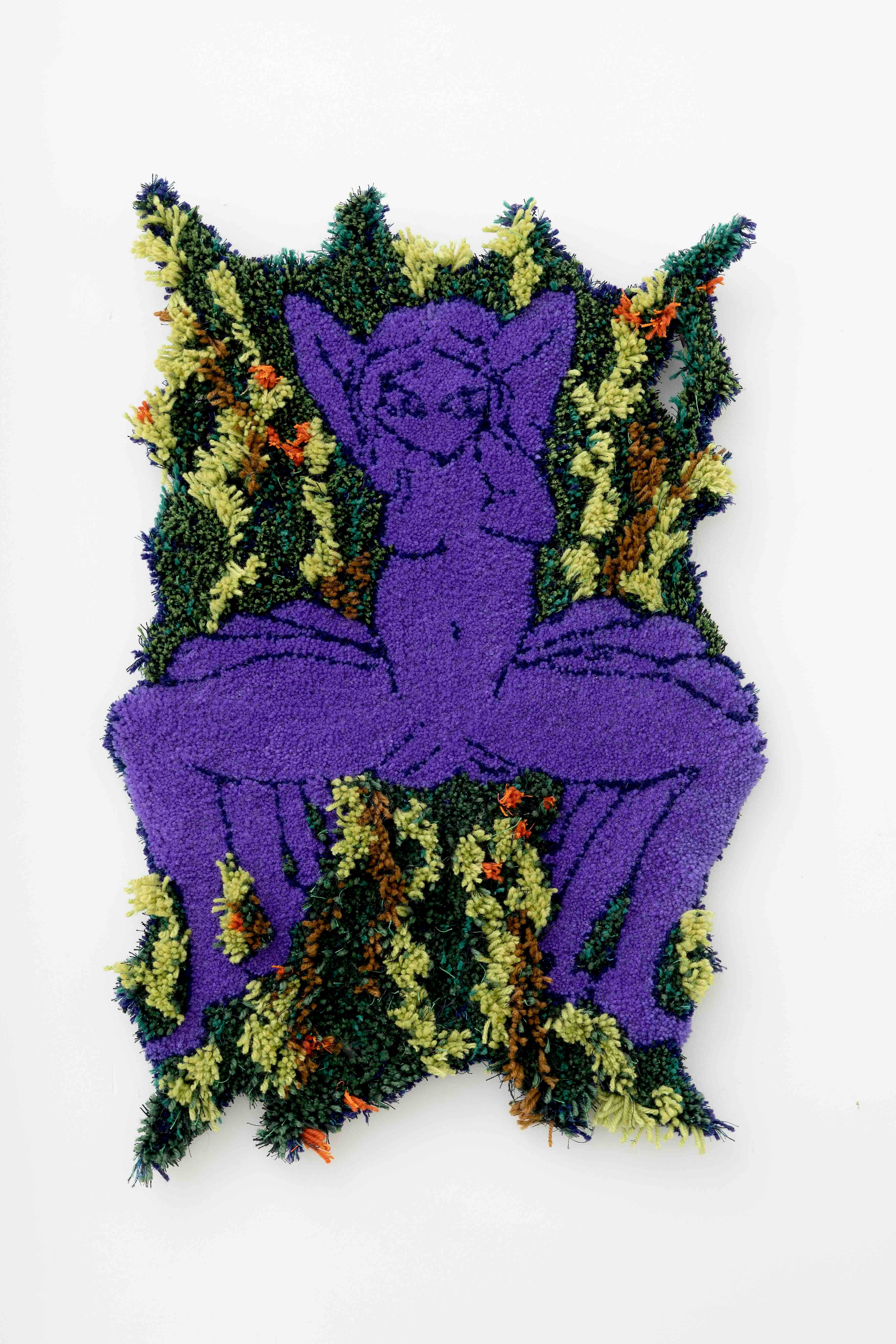
Spider, 2023
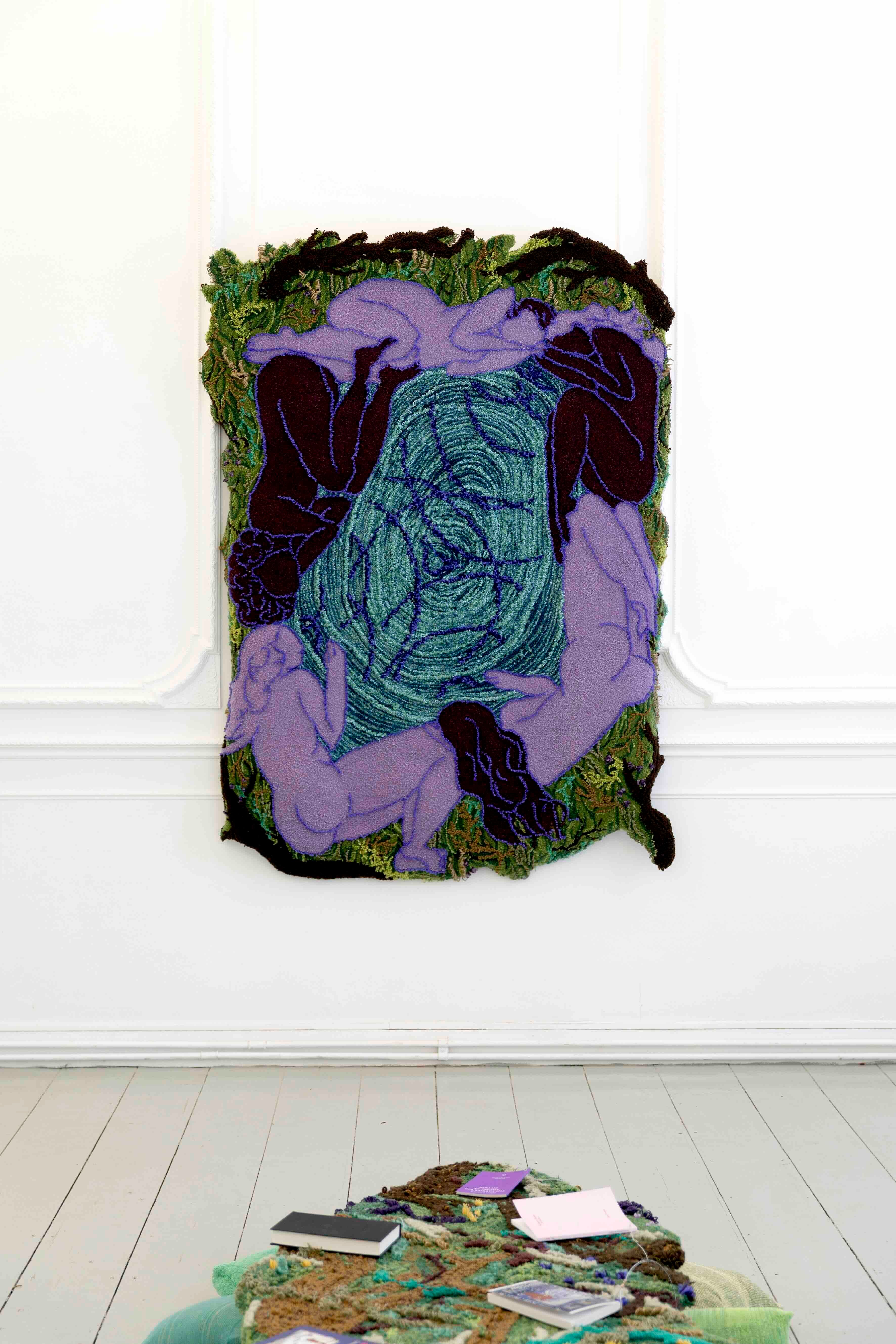
Making Waves at the Well, 2023
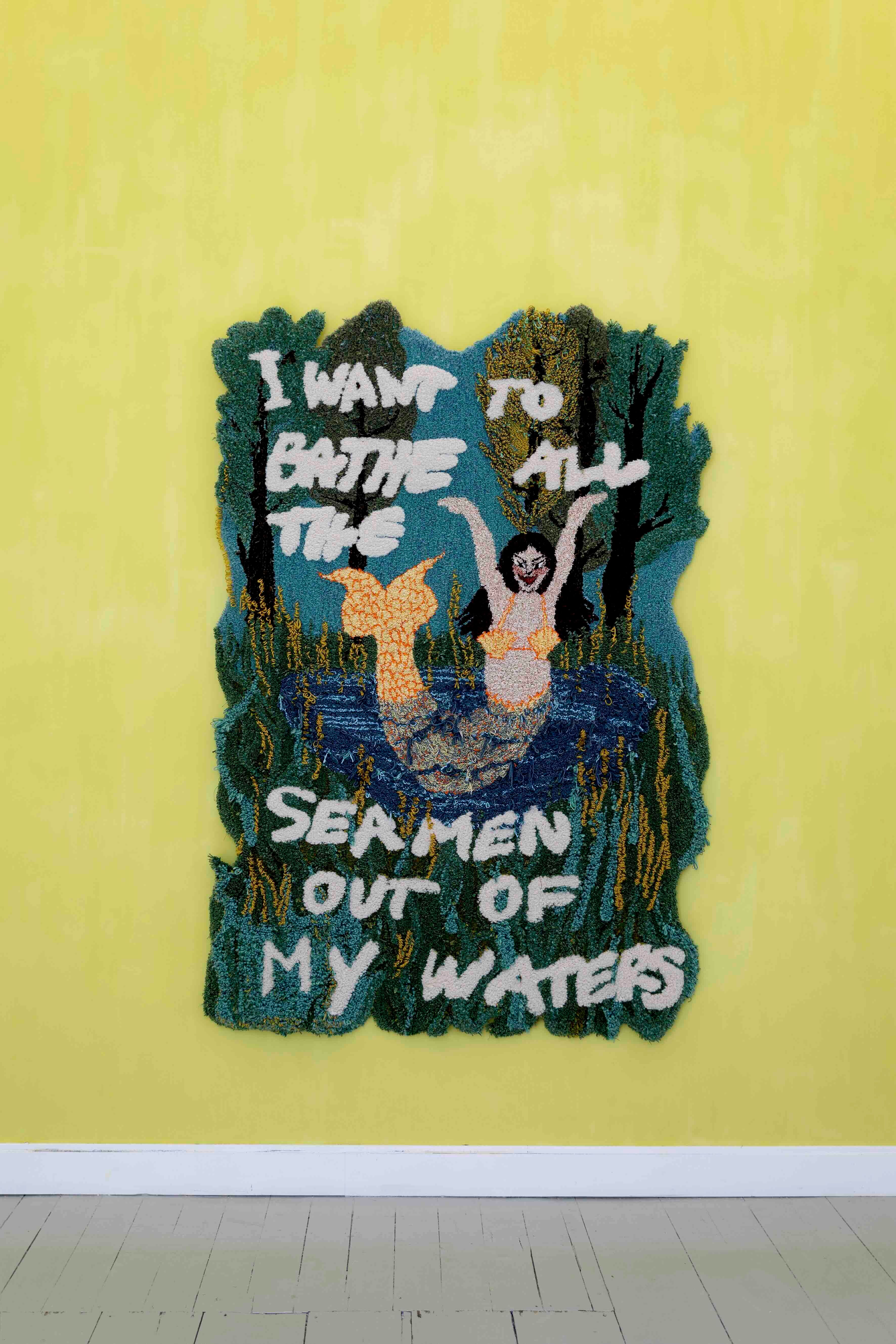
My Waters, 2023
Artist Book - To Hunt a Hunter, We Gather, 2023
We Weave, 2023